

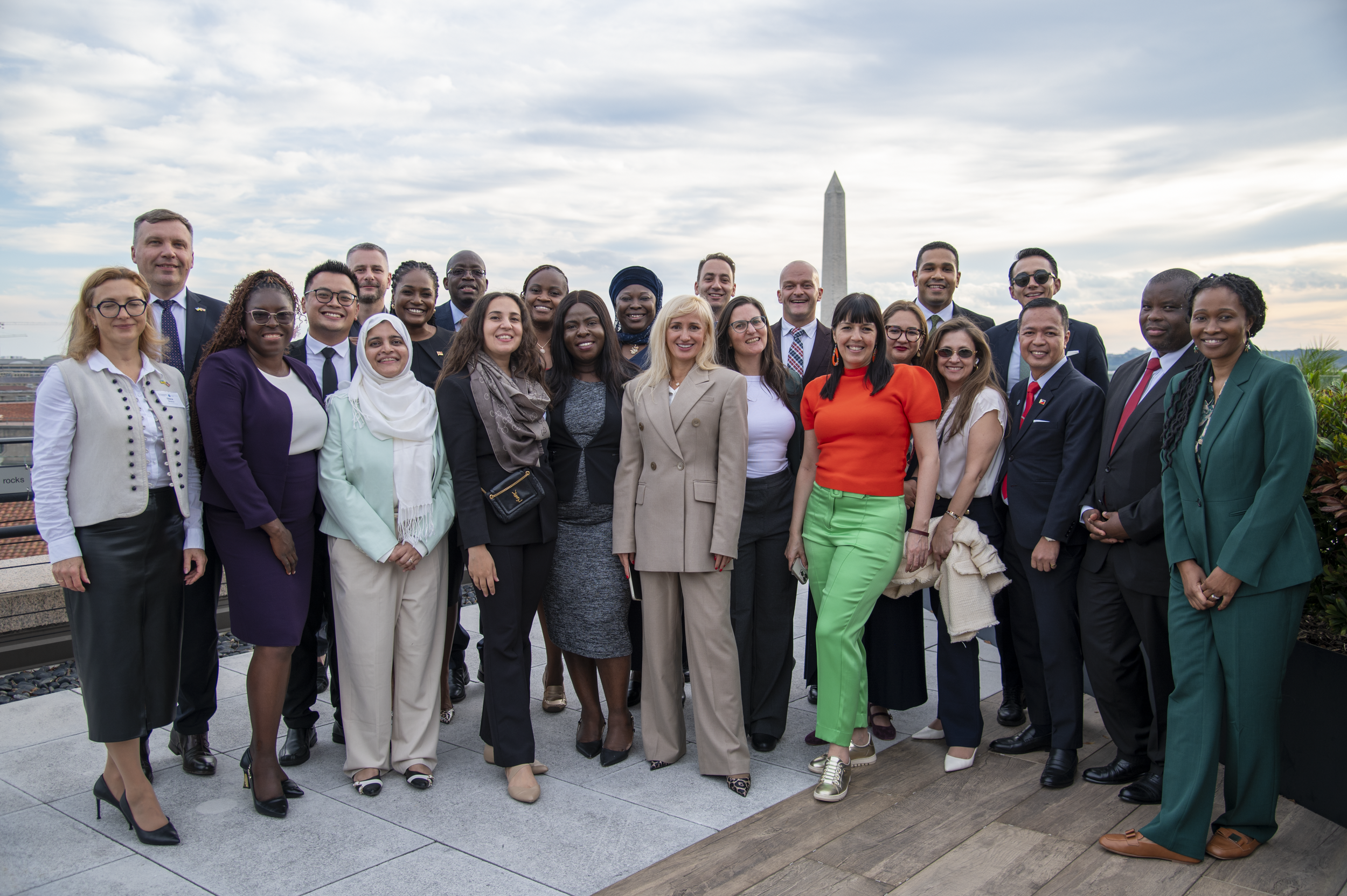
The 2026 Judicial Fellowship Program brought 25 judicial leaders from 21 countries together in Washington, D.C., and Charlottesville to exchange experience, examine shared challenges, and build relationships that extend beyond the courtroom.
What does justice mean to the people responsible for delivering it?
For Dren Rogova, a judge at Kosovo’s Commercial Court, the answer begins with trust: the belief that the law protects everyone and works for all of us, including those without power or influence. For other members of the 2026 Judicial Fellowship Program, the question opens conversations about fairness, equality, integrity, and the values that constitutions and courts are meant to protect.
These questions carry immediate consequences in the Fellows’ courtrooms. Their decisions affect families, livelihoods, individual freedoms, and the relationship between people and public institutions.
From September 28 through October 9, 25 judicial leaders from 21 countries explored those responsibilities together through the Judicial Fellowship Program, jointly convened by the U.S. Chamber of Commerce Foundation and the Presidential Precinct. Across two weeks in Washington, D.C., and Charlottesville, Fellows engaged with American judges, scholars, legal practitioners, and one another on the challenges facing courts around the world.
The cohort brought experience from family courts, commercial courts, constitutional and administrative proceedings, and cases involving corruption, organized crime, environmental protection, and human rights. Their legal traditions and national circumstances varied widely. Yet many of the questions they faced were familiar across borders: How do courts earn public confidence? How can judges preserve their independence while remaining accountable? And how can judicial leaders strengthen institutions under pressure?
The Fellowship created space to examine those questions with colleagues who understand the demands of the work.
Trust, accountability, and the work of courts
The program began in Washington with a global judicial dialogue, giving Fellows an opportunity to share experiences from their own jurisdictions and begin building the trust needed for candid exchange.
Visits to the Supreme Court of the United States, the U.S. District Court for the District of Columbia, and the U.S. Court of Appeals for the D.C. Circuit offered opportunities to explore American judicial practice directly. A private conversation with Supreme Court Justice Neil M. Gorsuch opened discussion about judicial leadership, the role of courts, and the administration of justice.
At the Federal Judicial Center, Fellows examined judicial education, research, court administration, and emerging approaches to artificial intelligence. Conversations with the U.S. Department of Commerce’s Commercial Law Development Program considered how judicial leaders can translate exchange into practical institutional reform.
Throughout the Washington portion of the Fellowship, public trust remained a central concern. The “Justice on the Global Stage” forum brought judicial perspectives into conversation with the legal, business, policy, and academic communities. Other sessions examined how courts communicate in an environment shaped by social media, misinformation, and artificial intelligence, and how transparency, predictability, and due process affect economic opportunity.
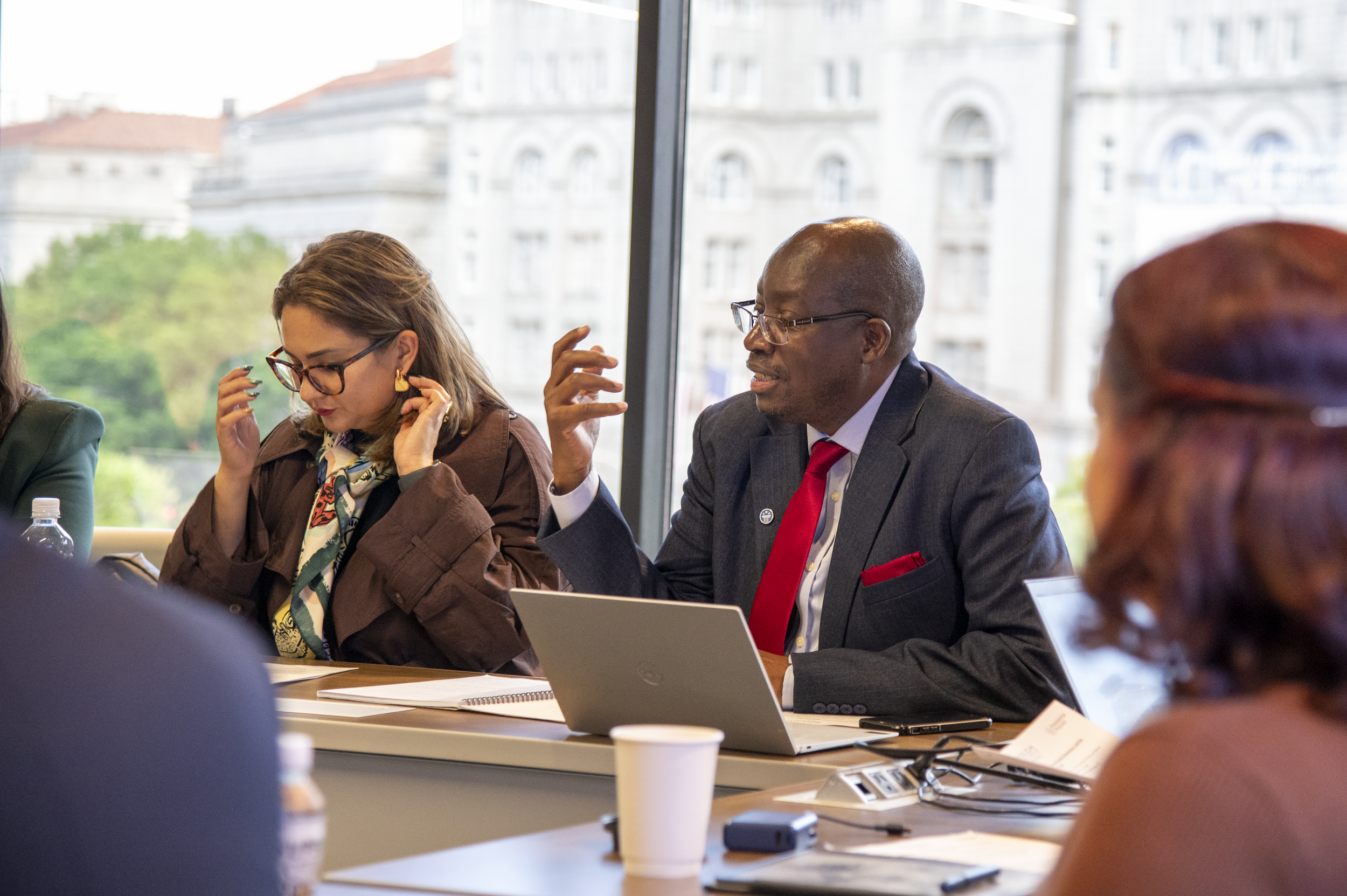
The Fellows’ reflections make clear why these conversations matter. Corruption can distort decisions and undermine confidence in an entire justice system. War threatens the conditions in which courts can function. Across different contexts, judges face the responsibility of protecting fair and impartial justice while sustaining the public’s belief that institutions can serve them.
A program led by the National Center for State Courts connected these concerns to everyday judicial practice. Through discussions of ethics, disciplinary systems, and court administration, Fellows explored how professional accountability and effective institutions support public confidence.
These exchanges also invited participants to consider how courts are experienced by others: by the person waiting for a decision, the lawyer navigating a dispute, or the community looking to an institution for protection.
Learning across legal systems
In Charlottesville, the Fellowship continued at the University of Virginia School of Law, where sessions examined constitutional government, executive authority, contested presidential elections, and the relationship between international human rights law and domestic legal systems.
The discussions asked Fellows to consider how constitutions can protect democracy, how constitutional change can undermine it, and what role courts can play when democratic institutions come under strain.
Other sessions connected these broad questions to specific judicial challenges. An examination of a Virginia exoneration explored how official misconduct and failures in the criminal justice system can lead to wrongful convictions. A session on artificial intelligence considered the constitutional and policy questions emerging technologies present for law and legal education.
Comparative law and judicial dialogue offered a practical thread through this work: how to learn from another jurisdiction, identify useful approaches, and assess what those lessons might mean within a different legal system.
The value of collaboration
For Egyptian judge Mohamed Bakry, that opportunity to learn directly from peers was among the Fellowship’s most valuable features. Some of the most useful lessons, he reflected, come from hearing how other judges have confronted similar situations in practice. Relationships across jurisdictions make it possible to exchange experience on independence, accountability, integrity, and public trust—and to bring ideas home that can strengthen institutions.
That exchange was reciprocal. Each Fellow arrived with expertise to contribute, as well as questions to explore. Together, their experiences gave the cohort a wider set of perspectives on the responsibilities they share.
The people behind the decisions
The Fellowship also made room for the personal demands of judicial leadership.
At UVA’s Contemplative Sciences Center, a workshop with Executive Director Kelly Crace explored strategies for managing sustained pressure, uncertainty, and change. For professionals whose work requires careful judgment under demanding circumstances, the conversation offered time to consider their own well-being and the cultures they help create at work.
Connections with the Charlottesville community extended the exchange. Fellows met with the Charlottesville Committee on Foreign Relations, engaged with UVA law students and faculty, and joined local legal professionals and Presidential Precinct supporters for an evening featuring remarks from U.S. District Judge Jasmine Yoon on justice, leadership, and the rule of law.
Carrying ideas forward
For Vivian López Núñez, a High Court Judge from Paraguay, judicial service calls for three qualities: honesty, humility, and humanity. Honesty is essential to confronting corruption. Humility means listening and asking the questions needed to understand before judging. Humanity keeps the people affected by a decision at the center of the work.
Her reflection offers a personal expression of the responsibilities explored throughout the Fellowship.
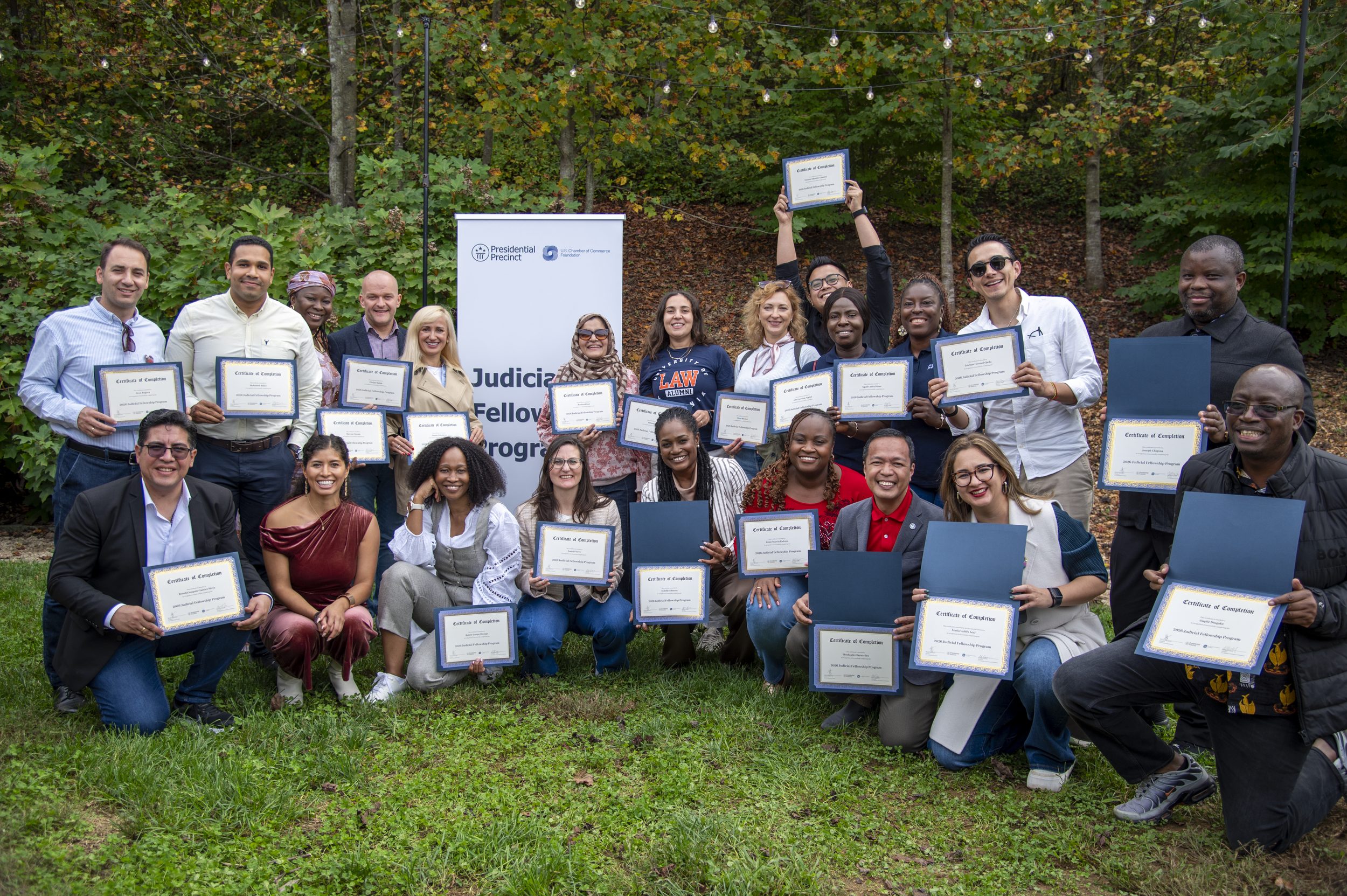
The final day brought Fellows to Thomas Jefferson’s Monticello before a send-off luncheon and certificate ceremony at Eastwood Winery. It marked the close of two weeks of learning and the beginning of the cohort’s participation in a wider alumni community.
A continuing judicial community
Judicial service can be isolating. The responsibility for a decision remains with the judge, even when the pressures surrounding it are shared by colleagues around the world.
The Judicial Fellowship Program builds relationships that judges can continue to draw upon throughout their careers. Through the Judicial Fellowship Program Alumni Association, Fellows join a community for continued learning, collaboration, and peer support. Opportunities such as the International Judicial Exchange, which pairs alumni with U.S. federal and state judges for six months of conversation, help sustain that exchange across borders.
The 2026 Fellows returned home to different courtrooms and different challenges. They also returned with new colleagues who can offer perspective, share experience, and understand the weight of the work.
For the Presidential Precinct and the U.S. Chamber of Commerce Foundation, that continuing connection is central to the Fellowship’s purpose: investing in judicial leaders who can strengthen institutions from within, supported by a global community committed to justice and the rule of law.
The Presidential Precinct is shaping the leaders of tomorrow. Subscribe to our newsletter for leadership insights and opportunities to get involved.