Global Democracy Fellowship
An immersive program for leaders in democracy
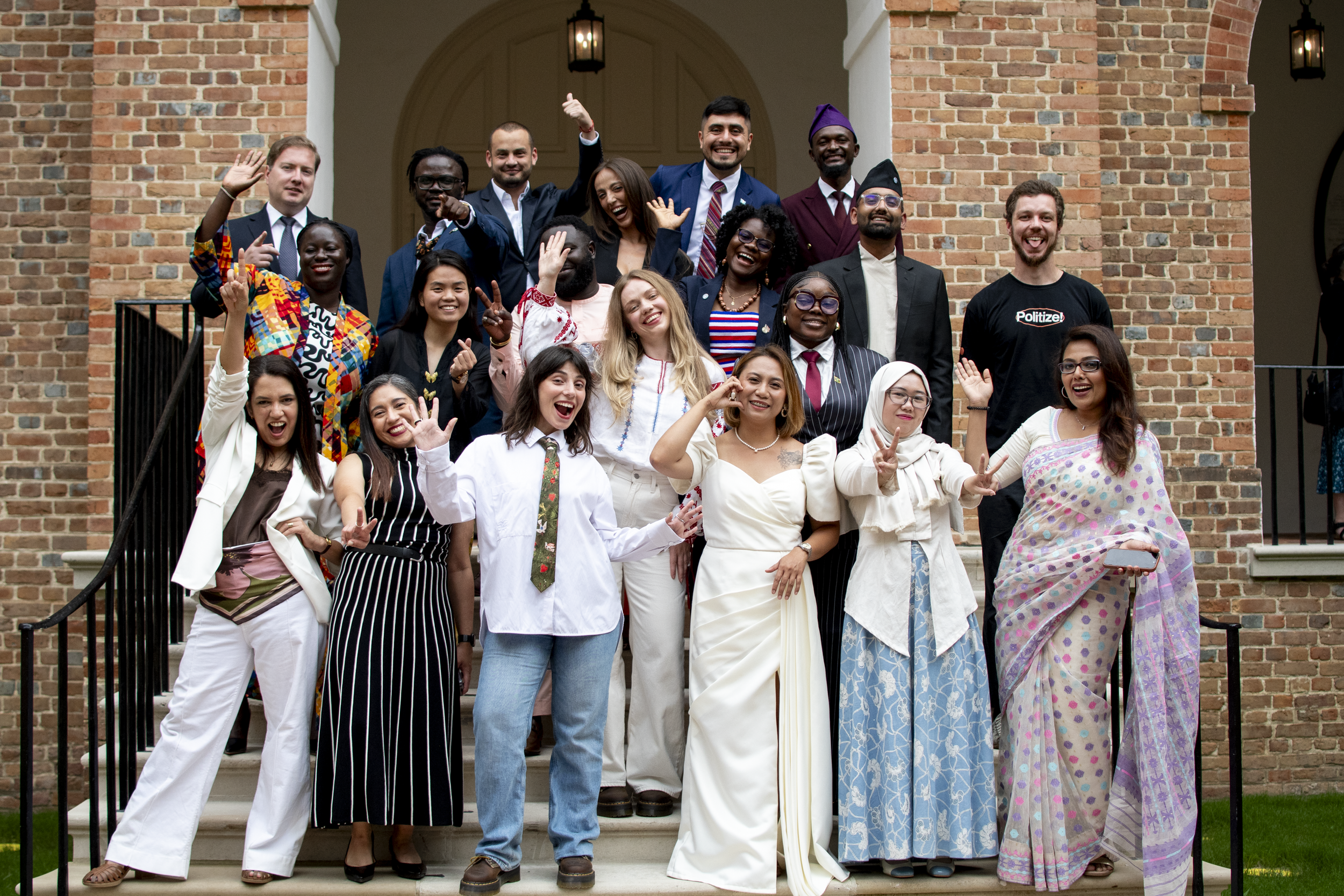
The Global Democracy Fellowship brings together leaders working to strengthen civil society and democratic institutions in their home countries.
Through workshops, simulations, site visits, and exchanges with faculty and practitioners, Fellows explore how to advance representation, protect rights, strengthen the rule of law, and expand civic participation. They bring an ongoing democracy-building project to the Fellowship and return home with new skills, ideas, and professional connections to support that work.
Applications for the 2027 Fellowship are due by 11:59 p.m. ET on January 8, 2027.
Elevate your leadership
Build practical skills to lead teams and advance democracy-building projects.
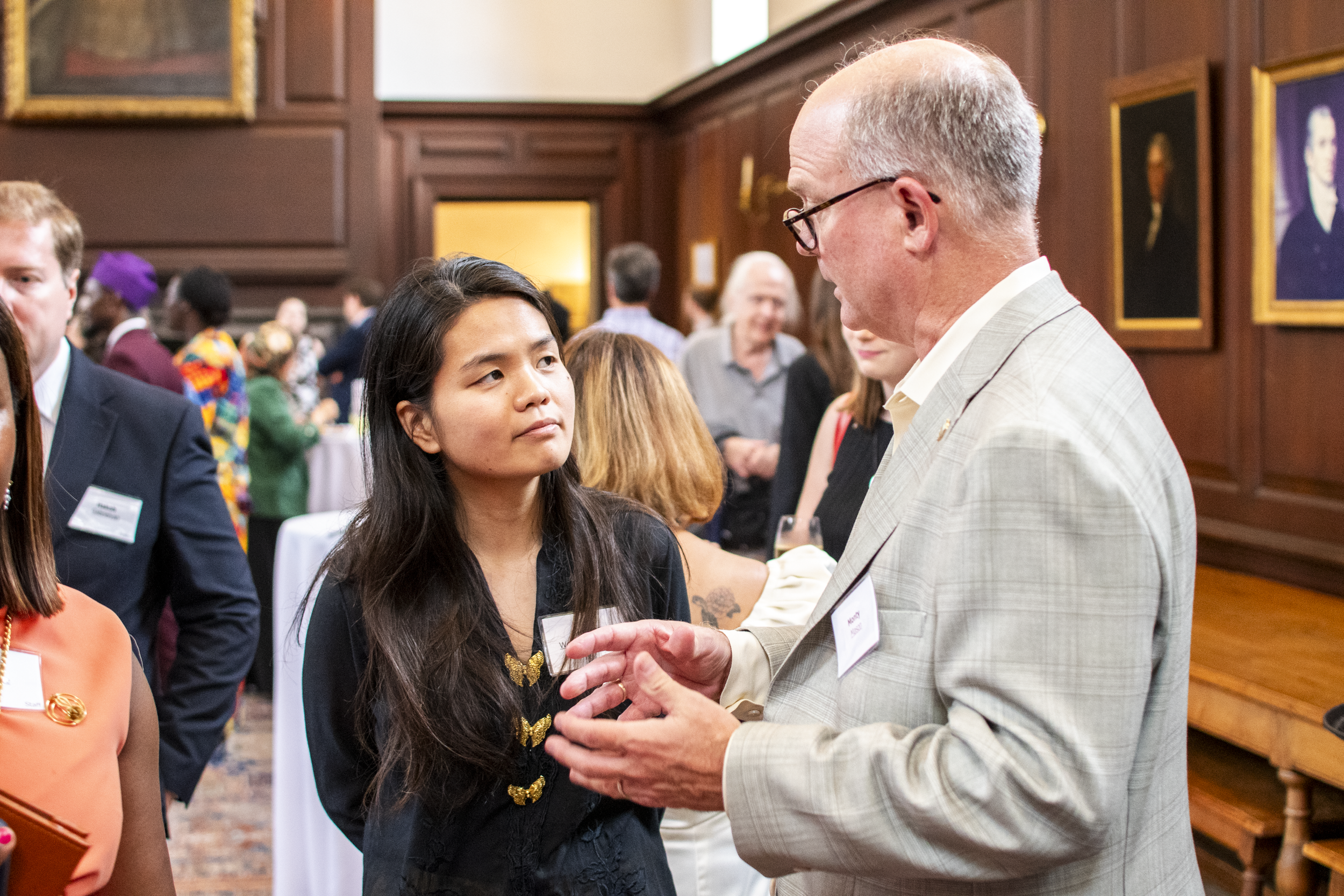
Exchange ideas with faculty, civil society leaders, and democracy practitioners.
Learn from peers working across different political and civic contexts.
Develop relationships that support collaboration beyond the Fellowship.
Who should apply?
The Presidential Precinct invites leaders working to strengthen civil society and democratic institutions in their home countries. We welcome applications from social movement leaders, civil society leaders, government officials, parliamentarians, democracy and human rights defenders, journalists, and people working in creative fields.
Applicants must have at least seven years of demonstrated experience in democracy-building, proficiency in written and spoken English, and a bachelor’s degree by the start of the Fellowship. Relevant fields include government and politics, law, peacebuilding, public policy and advocacy, communications, media and journalism, and cultural heritage and preservation.
The Fellowship takes place June 5–July 2, 2027, in Charlottesville and Williamsburg, Virginia, and Washington, D.C. Applications are due by 11:59 p.m. ET on January 8, 2027.
-
The 2027 Fellowship is open to citizens of countries where representation, the rule of law, rights, or civic participation are under threat, or where a recent opening has created an opportunity for democratization. The Presidential Precinct draws on sources including V-Dem, the Economist Intelligence Unit, the Atlantic Council’s Freedom Index, and Transparency International to identify eligible countries.
Click to access this year’s key countries and a copy of the application questions. -
The application asks about your professional experience, an ongoing democracy-building project, and what you hope to accomplish through the Fellowship. You’ll submit written and video responses, an English-language CV or résumé, a letter of recommendation, and an outline for a democracy-building case study.
-
When does the application close?
The application closes on January 8, 2027.
When will I know if I have been selected?
We will notify applicants no later than March 1, 2027.
Do I need to submit a TOEFL score to prove my proficiency in English?
No. We do not require a TOEFL score.
Do I need to have a visa to apply?
No. Invited participants who do not have a U.S. visa may apply for a J-1 visa with program sponsorship.
How many Fellows will be selected?
The 2027 Fellowship is capped at 20 participants.
I work full time. May I still apply?
The Global Democracy Fellowship is a robust and intensive learning experience. Fellows should expect full days of seminars, leadership training, site visits, and group activities. Fellows will have free time most evenings and some weekends to attend to personal business and professional commitments, explore personal interests, and join other Fellows for social activities.
We support Fellows who need to attend to urgent matters at home and do our best to accommodate scheduling conflicts beyond their control. With these caveats, serious applicants should be prepared to delegate many of their professional responsibilities while in residence for the Fellowship program.
Does the Fellowship pay for my airline ticket to the United States?
Yes. Fellows’ round-trip international airfare is fully covered by the program.
Does the Fellowship provide room and board?
Yes. Fellows’ lodging is fully covered by the program. In addition to group meals throughout the program, Fellows receive a subsidy for meals and groceries based on the location and government per diem.
Does the Fellowship provide a stipend?
No. Fellows do not receive a stipend.
Does the Fellowship provide travel insurance?
Yes. The program will purchase a travel insurance policy for each Fellow.
What expenses are my responsibility?
Invited Fellows must pay the visa application fee and SEVIS fee.
Once the program starts, Fellows are responsible for medical co-pays, personal items, gym fees, individual cultural outings and event tickets, local transportation outside the official program agenda, and similar incidentals.
Fellows may request an early arrival and a later departure from the United States. However, the program will not reimburse expenses incurred before or after the official program dates.
What will I learn from this Fellowship?
As a democracy-builder, you will gather and apply frameworks, strategies, and practical tools to strengthen democracy in your community and beyond. You will gain new knowledge and skills to support citizens, civil society organizations, journalists, and political leaders when formal institutions are under pressure.
You will be able to assess:
What makes civil society organizations and movements resilient, legitimate, and effective.
How narratives, memory, and identity influence perceptions of legitimacy.
When elections produce meaningful political accountability.
How to narrow the gap between constitutional rights and lived reality.
As a thought leader, you will be able to convey concise and substantive answers to five questions about the state of democracy:
How does democracy erode, and what makes societies resilient to democratic decline?
Who holds power, how is power exercised, and who is excluded?
How do states, institutions, civil society, technology, and information shape democratic outcomes?
How does historical memory influence contemporary political identity and democratic participation?
How can democratic principles be translated into practical action within different cultural and political contexts?
What types of activities are involved?
Practical academic sessions include seminars, group discussions, skills-building exercises, experiential activities, and case study development taught by faculty and practitioners who challenge you to think critically, ask questions, and speak for yourself.
Site visits complement academic sessions, putting you in dialogue with peers who share what they have learned through their own experience and recommend best practices.
Leadership training occurs throughout the Fellowship, including individual and group work with a Gallup-certified CliftonStrengths® trainer.
Cultural activities round out the official program through exploration of art, music, literature, film, and other forms of individual and collective expression and civic participation.
Fellowship highlights
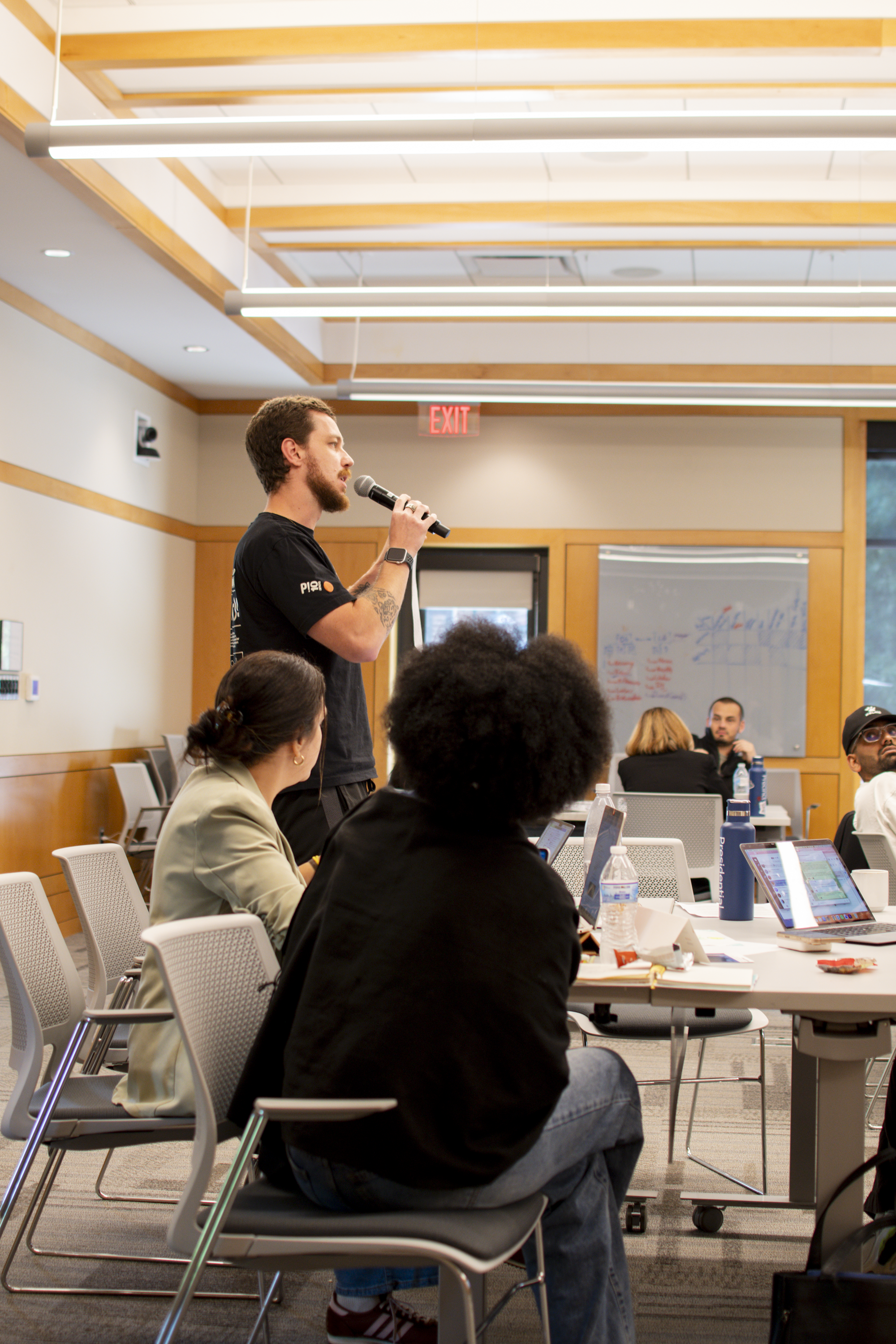
Charlottesville | June 5–16
Key Sites: University of Virginia, James Monroe’s Highland, Thomas Jefferson’s Monticello
nonviolent protest strategies • artivism • environmental and social justice • executive leadership • contemplative sciences • storytelling • civic education • cultural preservation
James Madison’s Montpelier | June 17–20
constitutionalism • rest and reflection
Williamsburg | June 21–28
Key Site: William & Mary
the state of democracy • power and influence • statecraft • history and memory • democratic resilience • deliberative dialogue • local governance • rule of law
Washington, DC | June 29–July 2
democracy and AI • media and democracy • legislative strengthening • professional networking
Hear from our alumni
“The seed you have planted in my life is going to grow beyond this.”
— Alphia Faith Kemokai, '26 Fellow