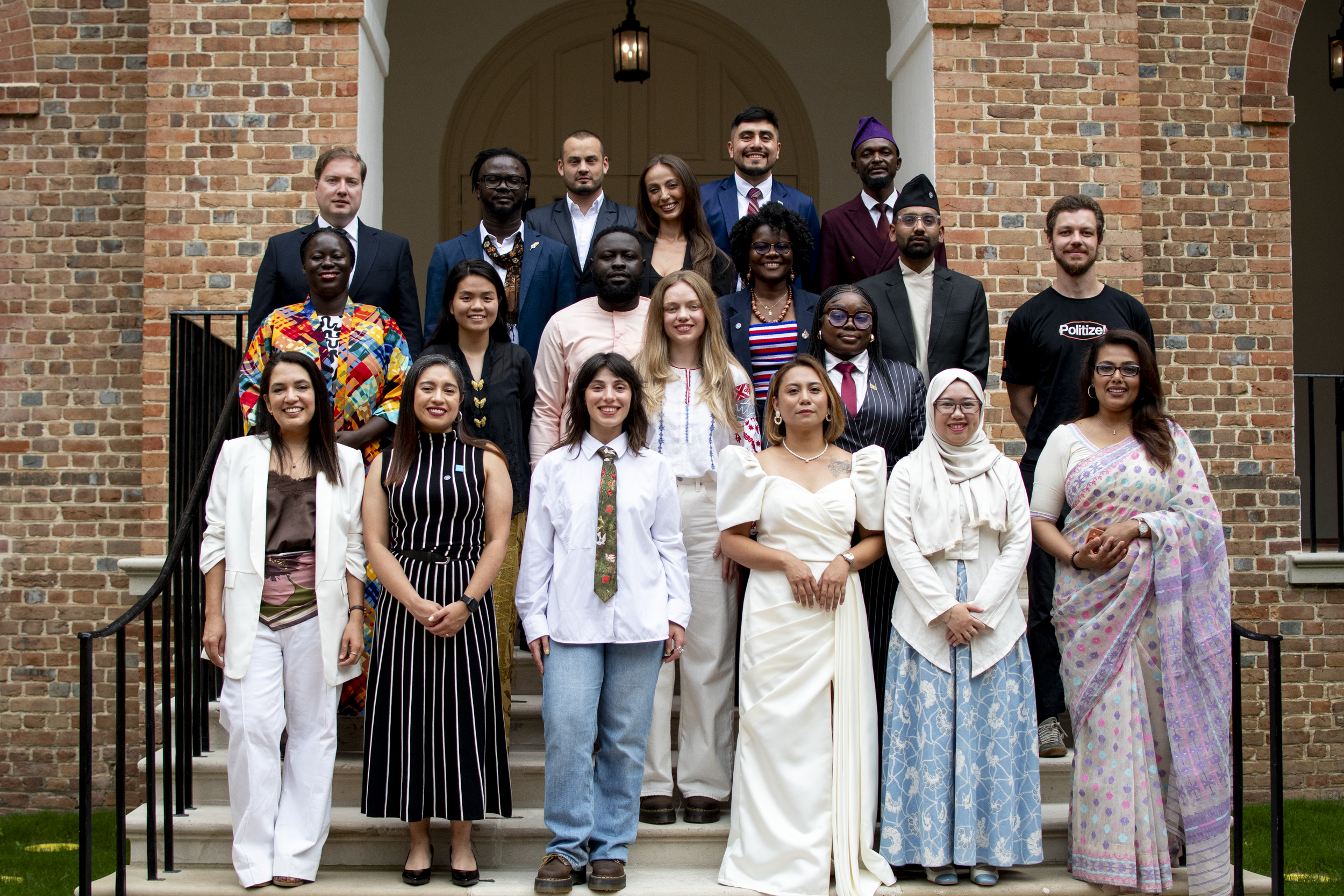
The inaugural Global Democracy Fellowship brought leaders from around the world to Virginia for six weeks of learning, debate, reflection, and connection.
What does democracy mean to you?
For six weeks this summer, 20 leaders from 20 countries explored that question together — not only in classrooms, but through campaign simulations, conversations with journalists and public officials, visits to historic sites, music, art, community gatherings, and the daily work of learning across differences.
The 2026 Global Democracy Fellowship — presented with the support of the Colonial Williamsburg Foundation, our partners, and generous donors — was the first cohort of a new Presidential Precinct flagship program. We created the Fellowship as a successor to the U.S. Department of State’s Mandela Washington Fellowship, which the Precinct hosted for 12 years, to continue investing in leaders with the potential to make a difference for democracy.
The 20 Fellows — organizers, policymakers, journalists, educators, advocates, artists, and public servants — arrived with varied perspectives, experiences, responsibilities, and projects. Through six weeks of learning together, they built a supportive community committed to fostering democratic societies where people can thrive. They arrived as leaders from around the world. They left as a network.
The Fellowship began in Charlottesville, where Mayor Juandiego Wade welcomed the cohort with a conversation centered on leadership, collaboration, and the shared responsibility of strengthening democracy.
From there, the learning moved quickly from ideas to practice. Fellows studied nonviolent protest strategies and explored how music has carried movements, memory, and calls for justice across generations at The Front Porch. At Charlottesville Tomorrow, the Virginia Center for Investigative Journalism, and WTJU, they considered the role that local news, investigative reporting, community radio, and podcasting play in creating an informed public and holding institutions accountable.
An election simulation at the University of Virginia Center for Politics turned the classroom into a campaign headquarters. Divided into parties, Fellows built platforms, developed messages, allocated resources, delivered stump speeches, and tested the compromises and collaborative decisions that shape democratic politics. Campaigns were launched, strategies debated, and coalitions built—all in the compressed pressure of a fictional by-election.
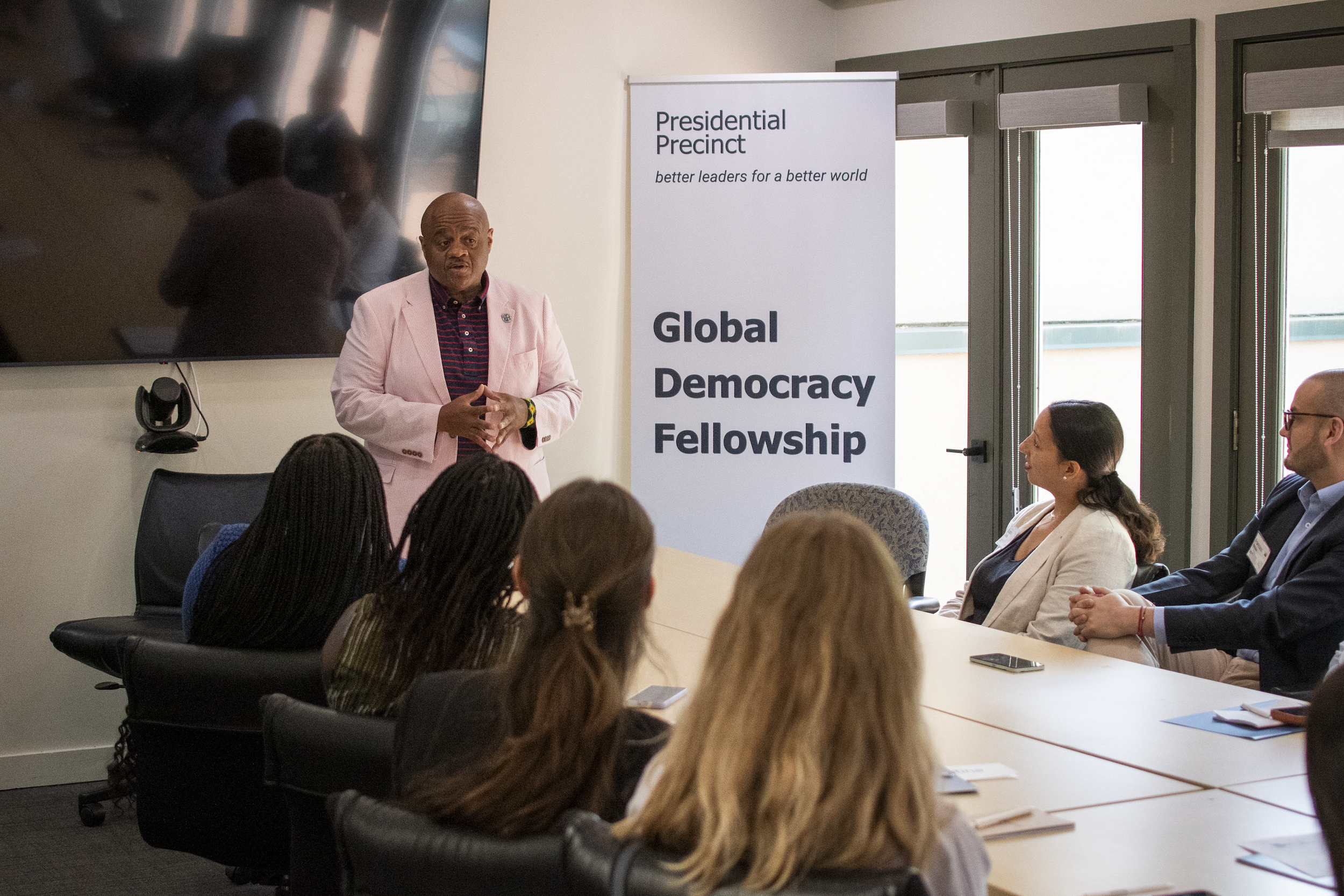
The Charlottesville portion of the program also made room for history, place, and community. At the Jefferson School African American Heritage Center, Fellows learned about the Swords into Plowshares project and the community process of transforming the city’s former Confederate monuments. Visits to James Monroe’s Highland and Thomas Jefferson’s Monticello opened conversations about public history, historic trauma, environmental stewardship, and the stories communities choose to tell. A conversation with Tom Tom Foundation founder Paul Beyer explored the role community-focused events can play in civic life.
Just as important were the relationships taking shape between scheduled sessions: over shared meals, during walks through Charlottesville, at Fridays After Five, and at a community happy hour that brought Fellows together with local leaders and friends of the Precinct. These lighter moments were part of the Fellowship’s work, too. Trust makes honest dialogue possible, and friendship gives collaboration somewhere to begin.
Writing a constitution — and finding common ground
At James Madison’s Montpelier, Fellows faced a deceptively simple question: How do you write a constitution?
During an immersive, multi-day workshop led by Professor Heinz Klug and Dr. Tinashé Hofisi, the cohort wrestled with constitutionalism, human rights, institutional design, and constitution-making. The simulation asked Fellows to debate difficult choices, listen closely, negotiate competing priorities, and find enough common ground to build durable democratic institutions.
The experience made one lesson tangible: democracy is more than a set of ideals. It is a practice — sometimes demanding, often imperfect, and always dependent on people willing to remain in conversation.
The Fellowship’s final chapter unfolded in Williamsburg, where the cohort arrived during the national commemoration of America’s 250th anniversary. With support from the Colonial Williamsburg Foundation, Fellows experienced Independence Day weekend in the Historic Area before beginning three weeks of programming at William & Mary and throughout the community.
Teresa Longo, William & Mary’s Associate Provost for International Affairs, Executive Director of the Reves Center, and a Presidential Precinct board member, welcomed the cohort with a session on arts, creativity, and democracy.
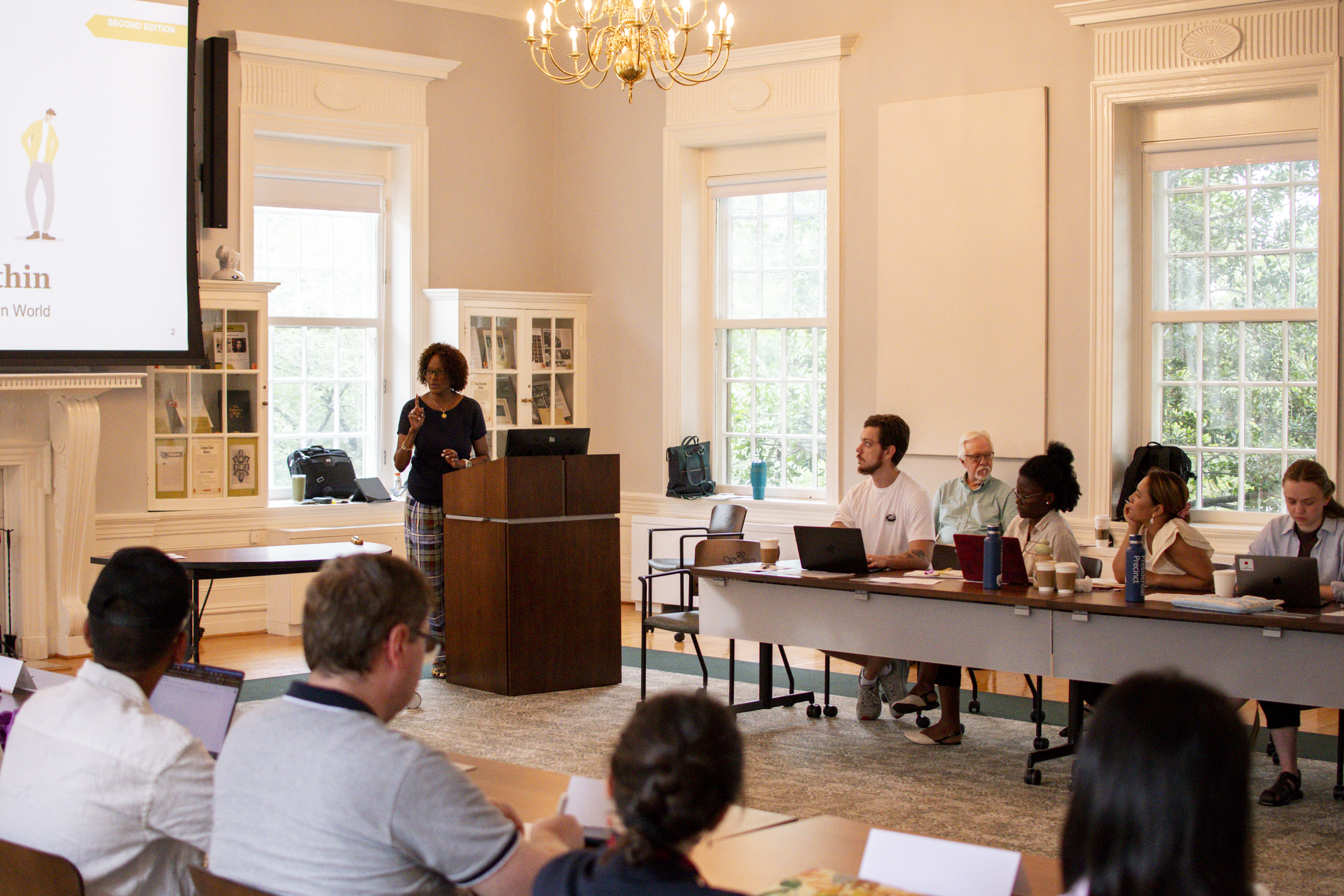
Their work spanned some of democracy’s most urgent questions. Sessions examined democratic erosion, political parties, digital democracy in the age of artificial intelligence, deliberative dialogue, post-conflict democracy building, local civic engagement, the tools of national influence, and the role of memory in advancing democracy and human rights.
Fellows also stepped outside the classroom. They spoke with Williamsburg Mayor Doug Pons and city officials about local government and public service; explored community-engaged archaeology and reconciliation with Colonial Williamsburg; and visited the National Center for State Courts and William & Mary Law School’s McGlothlin Courtroom. A design-thinking workshop challenged them to approach public problems with experimentation and empathy, while a Braver Angels “Depolarizing Within” workshop gave the cohort tools to recognize assumptions and model more constructive debate.
One theme connected every stage of the Fellowship: discovering and leading from one’s strengths. Leigh Ann Carver, Program Director at UVA’s Women’s Center and a Gallup-Certified Strengths Coach, helped Fellows connect their individual talents and values to the teams, organizations, and movements they lead. The recurring sessions culminated in personal leadership visions and practical plans for carrying the summer’s learning home.
No roundup could capture every memorable moment: the protest songs, the spirited campaign pitches, the Fourth of July celebrations, the debates that continued after a session ended, or the laughter that followed a long day of difficult questions.
Those moments mattered because the Fellowship was never only about transferring knowledge. It was about creating the conditions for 20 leaders — with different cultures, professions, and political contexts — to learn from one another. Across six weeks, the cohort practiced the habits at the heart of democratic life: curiosity, courage, disagreement, reflection, and connection.
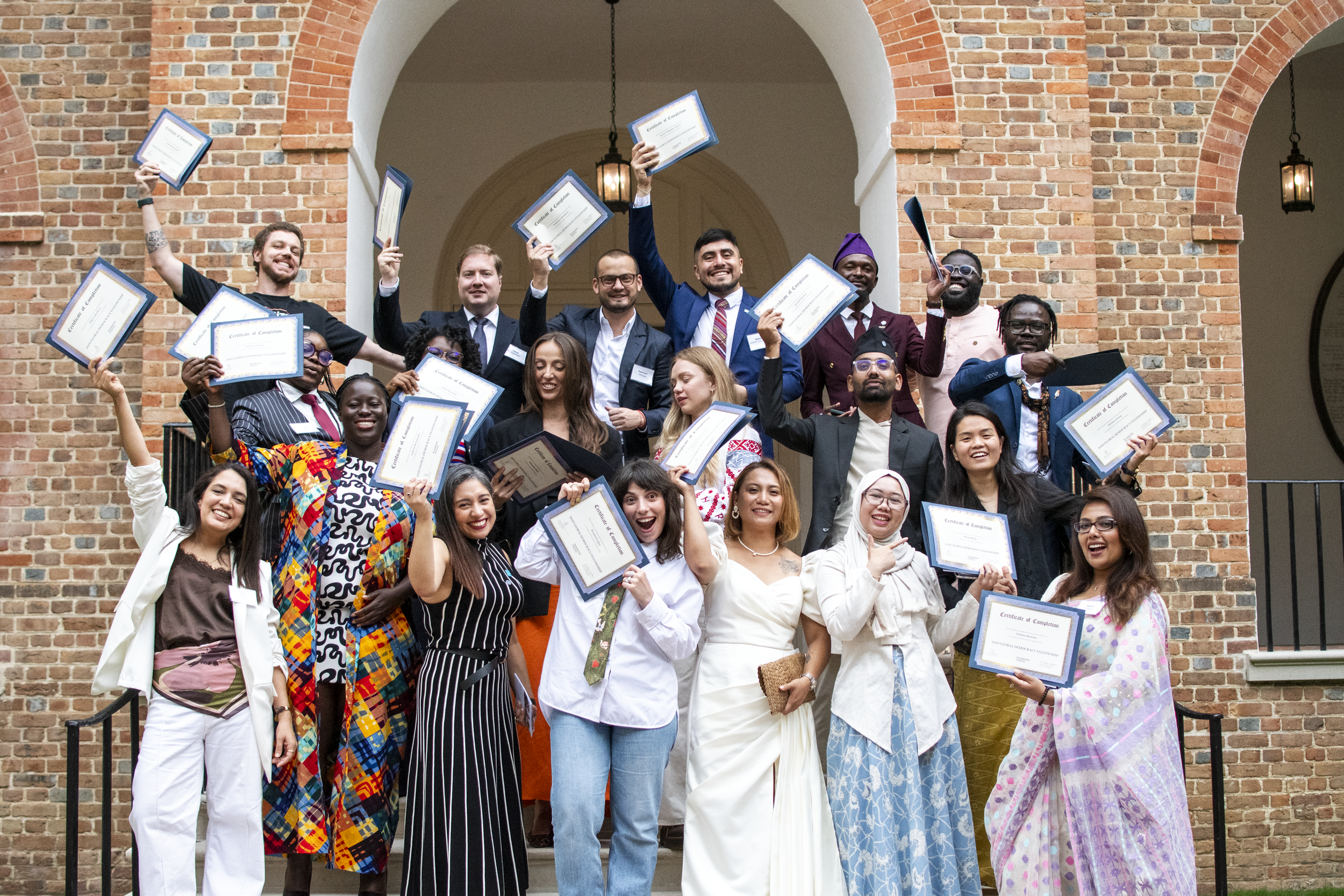
On July 21, Fellows, Presidential Precinct staff, and friends gathered in the historic Wren Chapel at William & Mary for reflections, remarks, and the presentation of certificates. The Honorable Samuel A. Hinds, Guyana’s Ambassador to the United States, delivered the keynote address.
Two Fellows shared lessons and memories from their time together. “Previously strangers, we are now friends,” said Isaac Aboah of Ghana. “We learned that a nation can find strength to confront its differences, and a responsibility has been placed on us.”
Alethea Wong of Malaysia reflected on the work ahead: “Democracy is always a work in progress, a practice to renew daily. Thank you, Presidential Precinct, for giving me the space where these questions can begin to take shape.”
After a charge from the Honorable John Charles Thomas, retired justice of the Supreme Court of Virginia, all 20 Fellows took part in a time-honored William & Mary graduation tradition: ringing the Wren Bell. Twenty rings marked the end of a remarkable summer — but not the end of the work or the relationships formed along the way.
One global network
Every Fellow who participates in a Presidential Precinct program becomes part of our alumni community, which continues to grow not only in numbers but in activity and engagement. This summer, we launched the Presidential Precinct Mentorship Program, pairing alumni with trusted friends of the Precinct. We are also introducing an ongoing series of Global Conversations, virtual events where alumni can engage with experts and influencers across a range of fields.
Alongside these formal programs, alumni continue to create their own collaborations, projects, and ventures. This summer, four Judicial Fellowship Program alumni reunited to organize and speak at an international conference on organized crime — one example of what becomes possible when the relationships built in Virginia continue across borders.
In the Fellowship’s final days, Jemhra Rose Garcia offered a vision for what that future might hold: “When leadership is shared, it does not diminish, it multiplies.”
That is our hope for these 20 Fellows: that they will share what they learned, carry forward the collaboration and camaraderie they experienced, and build lasting movements for their communities. As Presidential Precinct President and CEO Toyosi Ogunseye told the cohort, “Impact comes from the courage to begin and the willingness to adapt.”
Each Fellow returned home with new tools, new perspectives, and 19 peers ready to challenge, encourage, and collaborate with them. We are proud to call these 20 courageous leaders Presidential Precinct alumni, and honored to remain part of their leadership journeys.
Six weeks. Countless conversations. One global network of leaders. We cannot wait to see what comes next.
The Presidential Precinct is shaping the leaders of tomorrow. Subscribe to our newsletter for leadership insights and opportunities to get involved.