Presidential Precinct Forum at UVA Darden Examines Role of Leadership in African Development
Originally published by the UVA Darden School of Business.
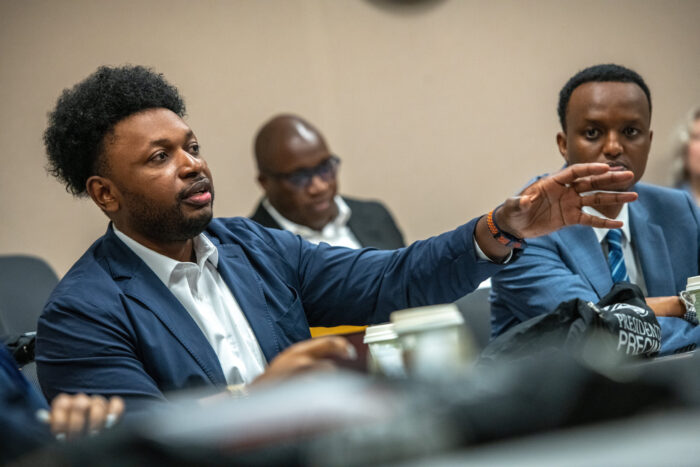
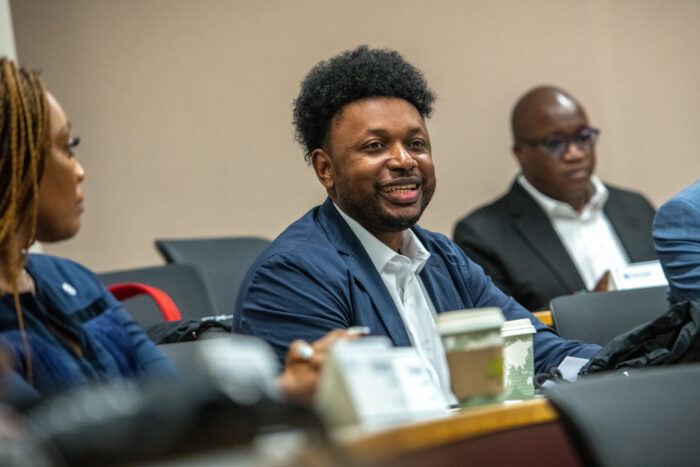
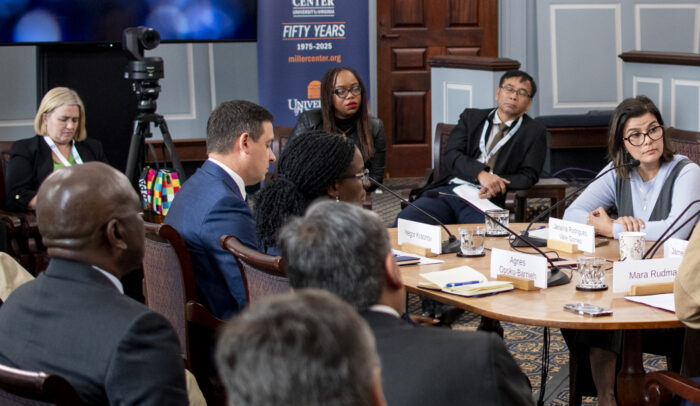
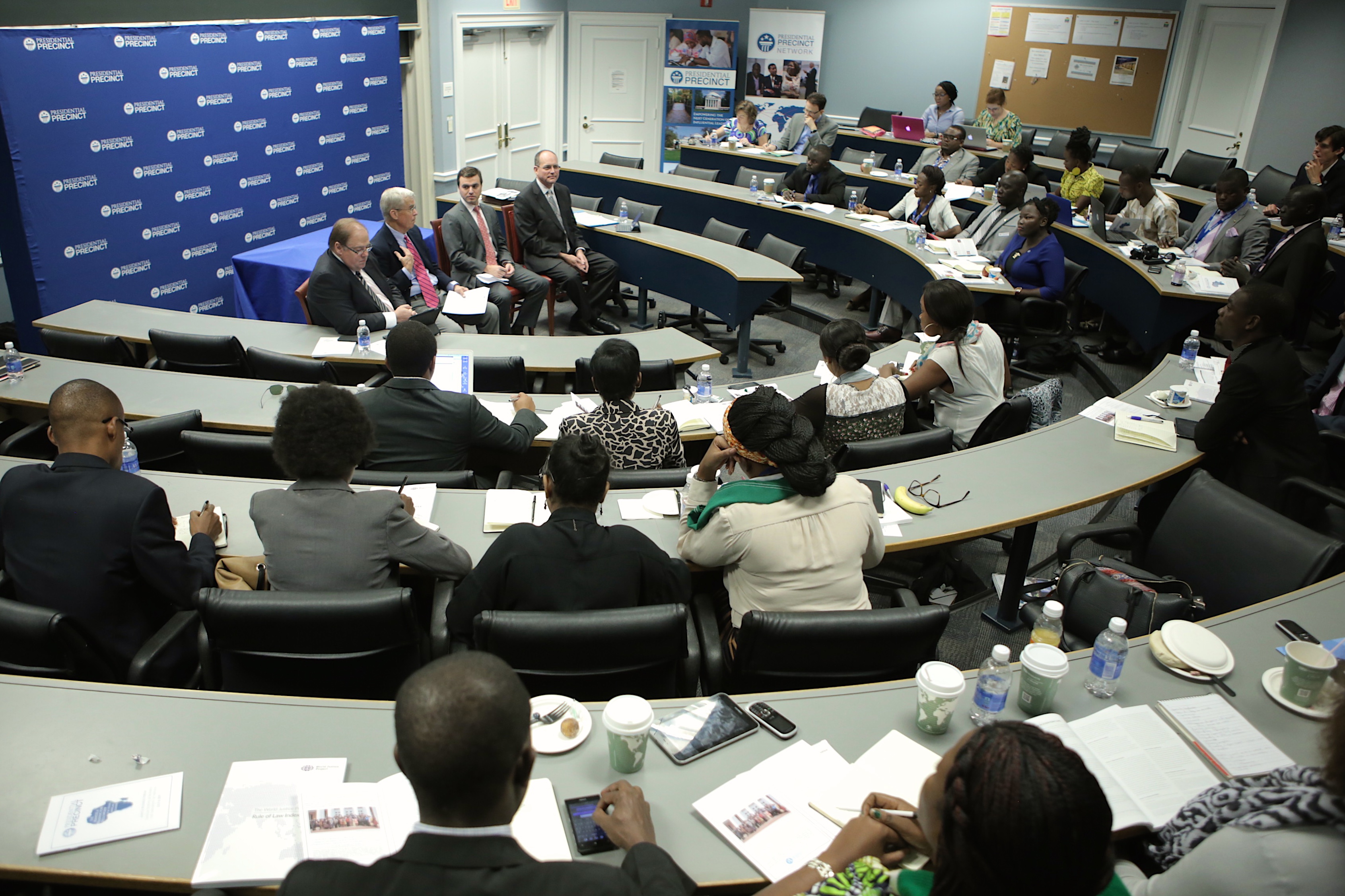
Presidential Precinct hosted the Africa Business Forum at the University of Virginia Darden School of Business on 6 July, and the vibrant discussion that ensued during a panel on the role of leadership in Africa revolved around that one word: trust.
“The single most important element … is trust,” said Bill Olson, an independent research scholar and former professor at the National Defense University. “The ability to develop trust between individuals and trust between communities. If you cannot do that, then all the rest of it, no matter how much money is invested, no matter who is doing it, will fail, because trust is reciprocal.”
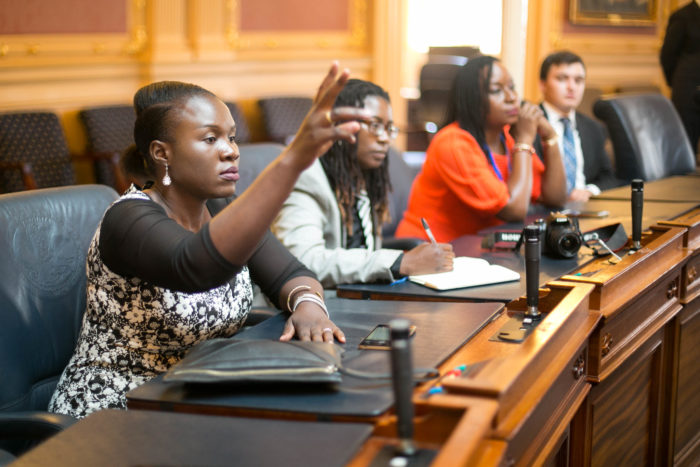
However, in a room full of Mandela Washington Fellows — participants in a leadership development program within the Young African Leaders Initiative launched by President Obama in 2010 — many attendees noted that their countries suffered from a lack of trust in their leaders, their institutions and sometimes both. The fellows came to Darden from Mozambique, Sudan, South Sudan, Zimbabwe, Uganda, South Africa, Tanzania, Swaziland and many other nations, but they shared in their concern over how to start building trust — whether it started with individuals or with institutions.
Mary Margaret Frank, associate professor of business administration and academic director of the Darden Institute for Business in Society, said where each particular country was in its development determined whether the focus should be on trust-building in leaders or institutions.
“The person I look up to the most is Nelson Mandela,” Frank said. “If you think about it, there was no trust in the institution when he stepped forward, and therefore you had to rely on the man.”
Because even the greatest leaders must pass the torch over time, Frank said great champions must use the people’s trust in them to build an institution that is trustworthy. If leaders don’t establish a sustainable platform that develops new leaders who can be trusted, institutional trust will never develop.
“So I think the questions for you are: Where are you? Where is your country?” Frank asked. “Do you need a champion, do you need a light? And if so, will you be that light? And if you are the light, how do you create a sustainable transition to the new light?”
The Mandela Washington Fellows attending the forum came to Darden as part of a six-week academic and leadership institute to help develop their ability to become a new light for their countries. The good news, Darden Executive Director of Global Affairs Marc Johnson said, is that leadership can be taught and developed. The lessons on leadership the fellows were learning in America could be taught to others in their organizations to help address the problems they were facing at home.
“You are seeing what creates great leaders, the creation of social capital, the connection of leaders with other leaders across and from disparate networks,” Johnson said. “We know that through bringing people together and through giving them access to resources, there are opportunities to create and develop and grow leaders.”
Olson advised the fellows that the inspiration to affect change would be challenged when they returned home by the overwhelming problems of “now.” He said that great leaders find ways to think ahead to “not now,” where the real problems that need solutions live.
He outlined four Cs on which to concentrate as leaders: crime, corruption, competence and community. Crime and corruption, he said, are liabilities that need to be limited for any nation to develop and achieve stability. The second two he categorized as assets that need to be built, where competence represents the skills to provide good governance and community is the strengthening of ties across vulnerable lines like ethnic groups and religions.
However, the four Cs would be impossible to address without establishing trust first, which Olson warned is not built easily. “In order to accomplish that trust, it takes an incredible amount of time and an incredible amount of investment of personal capital.”