Presidential Precinct hosts panel "Responding to ISIS: Violence Against Women and Girls"
Originally published by the Cavalier Daily.
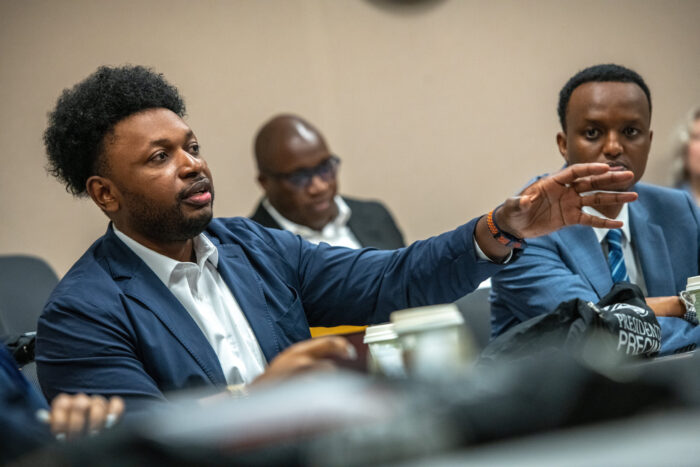
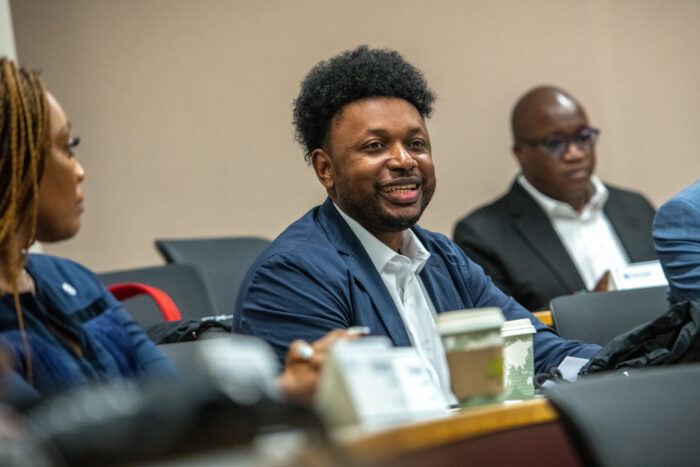
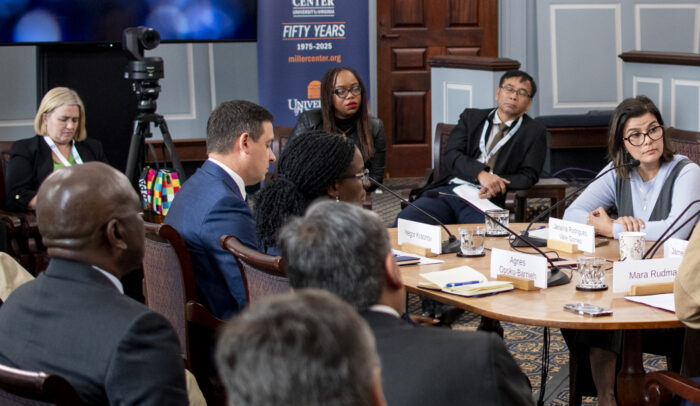
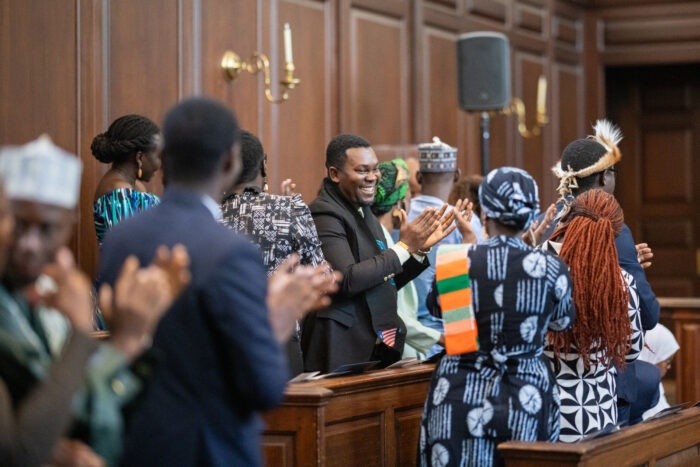
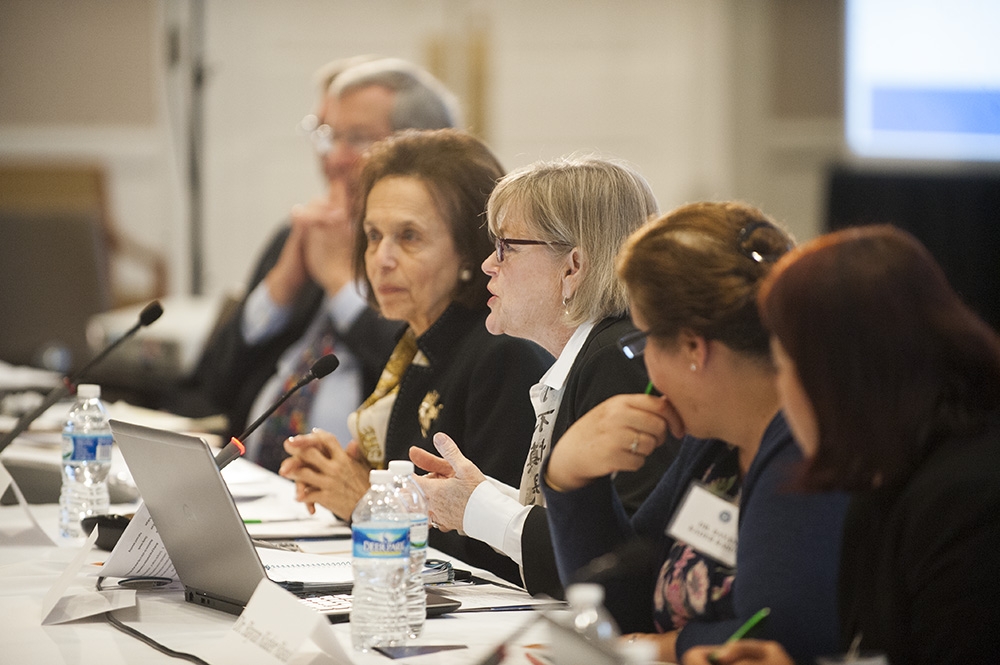
Presidential Precinct hosted the panel discussion “Responding to ISIS: Violence Against Women and Girls” Monday, discussing the violence of the self-styled Islamic State against women and girls and working to brainstorm solutions to address the trauma and ongoing tragedy faced by refugees.
The panel was a partnership between the University’s Morven Project, the AMAR International Charitable Foundation, the Presidential Precinct and the University Women’s Center.
The conference featured University professors and students, humanitarian NGO directors and Baroness Emma Nicholson of Winterbourne, Prime Minister David Cameron’s trade envoy to Iraq.
Morven Project Director Stewart Gamage, who was responsible for coordinating the conference, said the need for action against ISIS should be linked to the traumatic treatment of women and girls in Syria and Iraq.
Haleh Esfandiari, one of Monday’s participants and director of the Middle East Program at the Woodrow Wilson International Center for Scholars, spoke about ISIS’ tactics and how the group is beginning to break up society.
“Everywhere the pattern is the same — women and girls are separated and the young are separated from the old, … ISIS men then begin their work,” Esfandiari said.
Nicholson, who is also chair of the All-Party Parliamentary Group for Business Development in Iraq and the Region and founder and chairman of the AMAR International Charitable Foundation, agreed, saying ISIS targets the family as a means to bolster control in the region. It is ruthless tactics like these, she said, which, if left unchecked, will ultimately lead to even greater societal disturbances.
“Family is the basic unit of society, therefore the unit of society that [ISIS attacks],” Nicholson said. “If [ISIS] continues, which I fear it will, … I believe hundreds of thousands of people will flee, probably millions.”
Such a situation would exacerbate the already significant refugee problem in countries like Lebanon, Jordan and Turkey.
To prevent such an outcome, there will need to be greater direct intervention by the West, Nicholson said. There also need to be greater efforts to “protect and develop” the foundations of democracy and the principles of private ownership and property.
This is not what is happening, however — in part due to a lack of public recognition of how severe things are in the region. Governments will only support greater involvement amid greater societal anger and horror at ISIS’ actions, Nicholson said. This, she said, is what she hoped the panel would foster.
“To make [governments] respond, people have to want this to happen,” she said. “If people can’t get the story, they don’t know what’s happening. So today’s part of getting what’s happening known. Because of the lack of foreign correspondence … the story is falling off.”
Law Prof. Deena Hurwitz said the panel was successful in raising awareness and encouraging advocacy against ISIS’s pattern of gender-based violence.
“The fact that they have this focus on responses and thinking about advocacy and action, it’s a really great way to do a conference — especially at a university where there’s so much discussion and there’s so much practice,” Hurwitz said.
Gamage said the student contributions were integral to the conference’s success. Nicholson said she plans to present some of the ideas developed at the panel when she addresses Parliament next week.
“I think the issues and the suggestions were really concrete and very specific, and some were actually new,” Gamage said.
Though many call for immediate foreign intervention, Sharon Davie, director of the Women’s Center, said the responsibility also falls on the shoulders of younger generations.
“Another thing with the conference that we were hoping is that the next steps will be taken by students, by younger people,” Davie said. “It was really important to have student be part of this. That was, I think, from the get go really key.”
Meanwhile, Dr. Bayan Kader Rasul, an expert in women’s health, presented a number of long-term goals, including creating centers for Post-Traumatic Stress Disorder treatment, organizing group sessions for traumatized women and providing legal support.
However, Davie said students can help in more immediate ways.
“Having a clothes drive would really help, or helping an NGO like AMAR,” Davie said. “Really, it’s people who are interested being able to use social media to give a version of what is happening there that is quite different from what we’re hearing.”