Making Justice Accessible: Dennis Orengo Juma's Struggle Against Extrajudicial Killings in Kenya
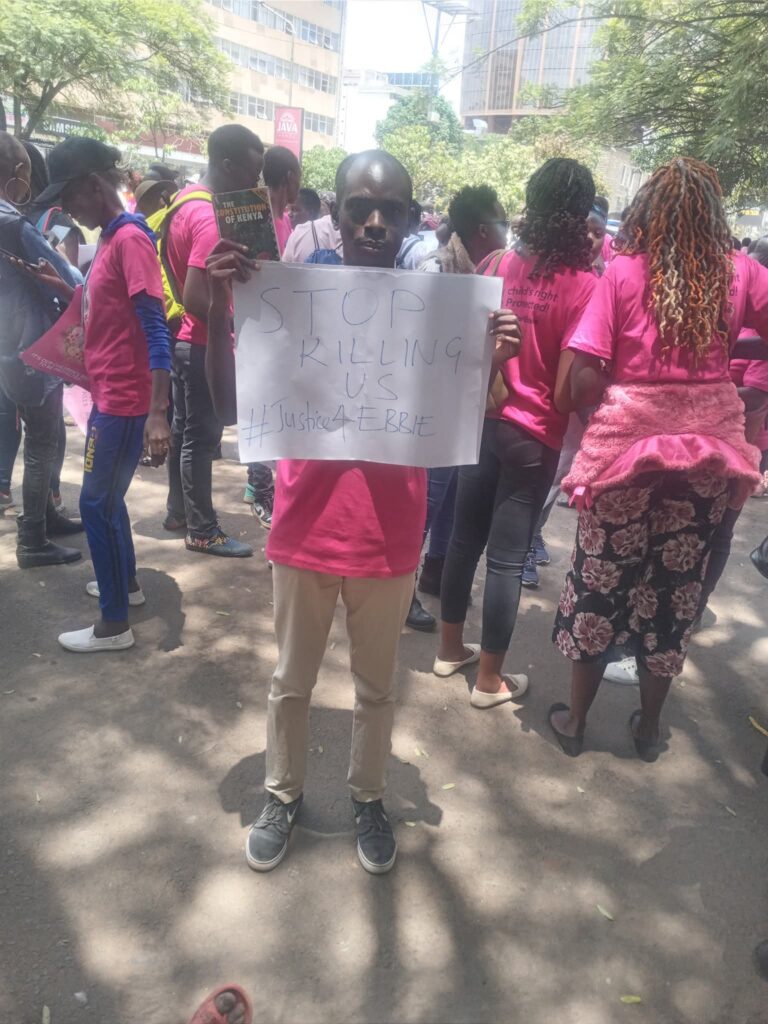
In 2015, a memorial football match in Nairobi’s Mathare slums marked the unlikely origin of a nationwide human rights movement. The match, organized by Dennis Orengo Juma (‘22 Mandela Washington Fellow), commemorated a friend who had fallen victim to an extrajudicial killing. Mathare has long dealt with injustice, and on this occasion, the community rallied around Dennis. “Three hundred people came to the match,” he recalls. “We told them to bring photographs of victims who had been killed or disappeared.” Extrajudicial killings or extrajudicial executions, “happen when someone in an official position deliberately kills a person without any legal process.” In 2024, Amnesty International documented at least 159 police-related killings and enforced disappearances in Kenya—a rate of three killings and forced disappearances per week.
In the course of the match, Dennis and his colleagues realized their individual story was part of a larger, communal pattern. They received over 500 pictures as part of their appeal for photographs of those who had been killed or disappeared. In response to this, Dennis formed the Mathare Social Justice Center, a local hub for legal support, documentation, and advocacy. “I didn’t set out to become a human rights defender,” Dennis says. “It began organically,” and evolved into a network of more than 100 centers across Kenya, fighting police brutality, extrajudicial killings, and systemic marginalization.
Prior to 2015, Dennis worked as a security guard. As he and his colleagues had no formal training, they pursued legal education to bridge gaps in knowledge and capability. They learned that documentation and storytelling are crucial: individual cases humanize systemic abuse and attract attention from both authorities and journalists. The movement grew in scope and sophistication, combining grassroots organizing with legal advocacy and public accountability initiatives.
Confronting Systemic Violence
Mathare, like other informal settlements in Nairobi, is burdened by chronic poverty, limited public services, and endemic violence. Generational deprivation is compounded by extrajudicial actions by state security forces.
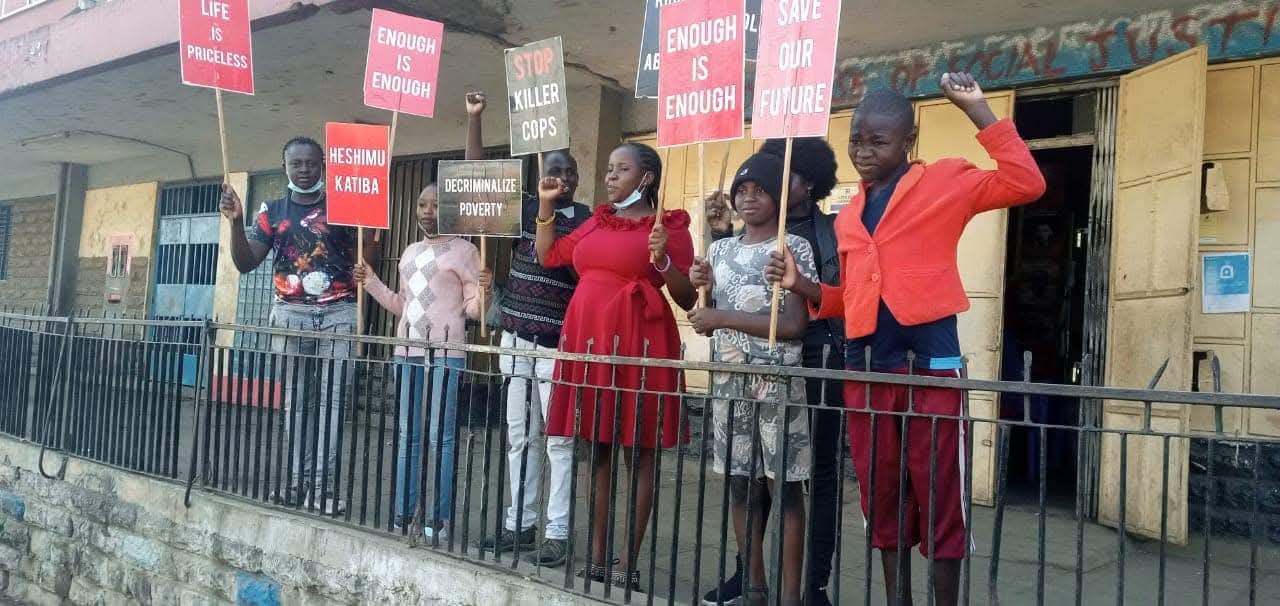
“A police officer needs no reason to kill you,” Dennis says. “If you walk through a settlement with a new watch, and you have no receipt for it, he might accuse you of stealing. No process. No trial. You are killed, and he takes your watch.” For Dennis, these killings underscore a sad reality: those who govern systems of law enforcement rarely punish systemic crimes. The response of Dennis’s Social Justice Centers is thus dual: they provide immediate assistance to victims and families while simultaneously documenting abuses to challenge the broader structures that permit impunity.
These efforts are reinforced through partnerships with established human rights organizations, which have contributed pro-bono legal support, enabling complex cases to proceed despite limited local resources. Political education is also central to the centers’ strategy. Workshops and community forums teach residents about constitutional rights, judicial processes, and avenues for reporting abuses, fostering a culture of legal literacy and civic engagement.
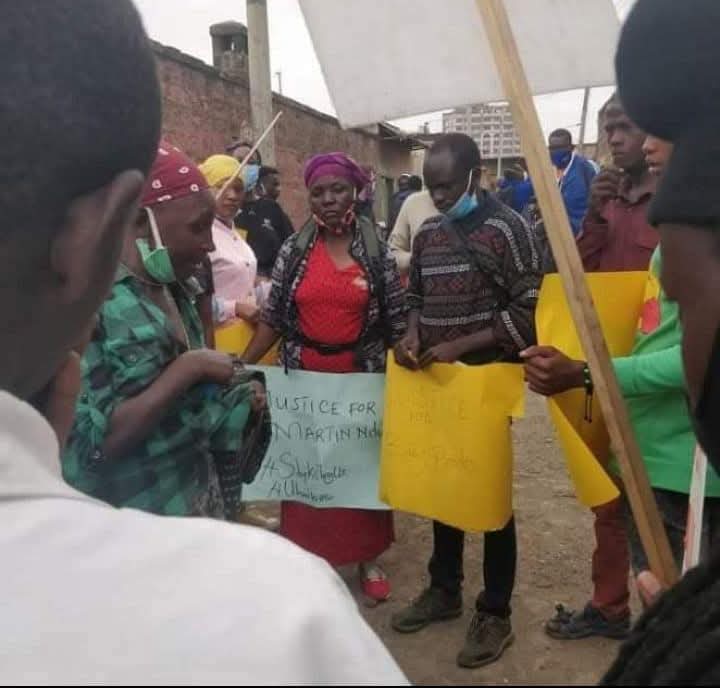
Cases are documented and publicized through media and local networks, generating pressure on authorities and raising public awareness. Judicial delays and administrative inertia threaten Dennis’s mission, but so far, his Social Justice Centers have ensured that crimes are not forgotten. They also serve as spaces for residents to seek guidance and support, reducing isolation and fear while building local resilience. This multi-pronged approach has translated into several outcomes: greater awareness of legal rights across settlements, prosecutions of corrupt police officers, and an empowered citizenry that can challenge impunity more effectively.
Lessons from the Front Lines
Dennis identifies several enduring lessons from the Social Justice Centers’ evolution. The first is the importance of grassroots organizing. By rooting the movement in the lived realities of Nairobi’s informal settlements, the Centers earn legitimacy that outside organizations often lack. Local leadership ensured access and built trust with the broader community.
A second lesson has been the transformative power of education. Political and legal literacy classes challenge entrenched stigmas that equate poverty with criminality. In Mathare, where residents were long dismissed as “thieves” or “beggars,” education reframes identities and equips people to demand their constitutional rights. Knowledge becomes not just a tool of defense, but a catalyst for dignity and empowerment.
Solidarity and collective action have reinforced both resilience and sustainability. By working in networks rather than isolation, the Centers multiply their capacity to withstand intimidation and resource constraints. Collaboration fosters both protection and innovation, turning disjointed resistance into a movement with national reach.
Above all, persistence has proven critical. Progress has been slow, hindered by bureaucratic inertia, hostile authorities, and recurring threats. Yet resilience—returning to the courts, documenting each case, refusing to abandon victims—has compounded into tangible gains. For Dennis and his peers, endurance itself is a strategy, ensuring that justice, though delayed, is not “permanently denied.”
Institutional Support and International Exposure
The Social Justice Centers operate under constant pressure from both state and market forces. Government officials have attempted to co-opt their work, by offering to fund their work while redirecting its focus toward less politically sensitive areas, such as environmental conservation. Threats to personal safety are routine.
Dennis remarks with a mixture of pragmatism and somber reflection: “If six months pass without us receiving threats on our lives, we know we are not making enough noise.” Despite these pressures, the Centers have sustained focus, leveraging creative tactics such as community radio, football tournaments, and grassroots forums to safely maintain engagement.
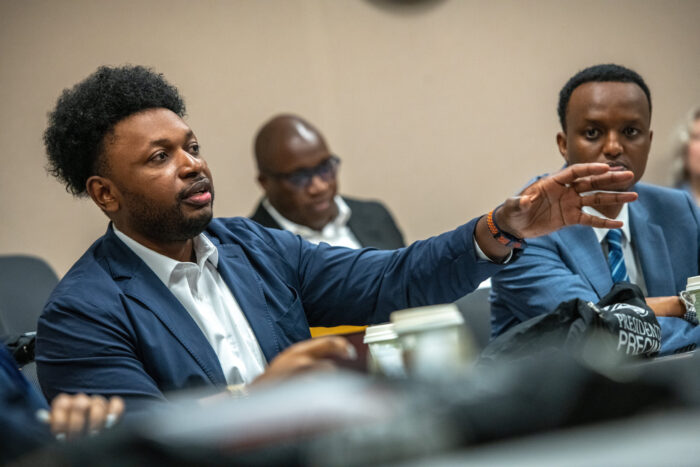
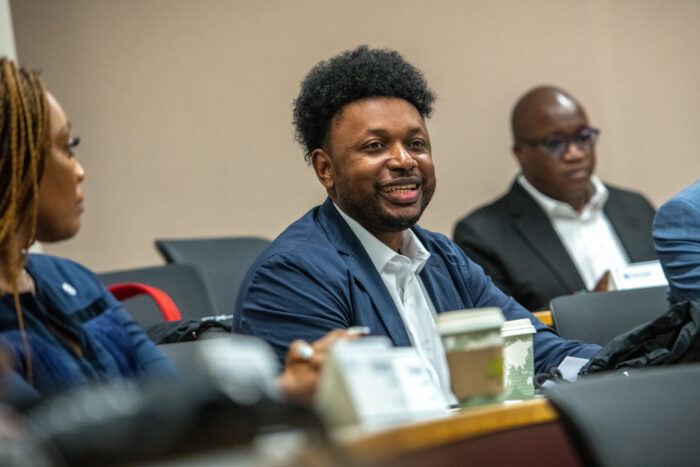
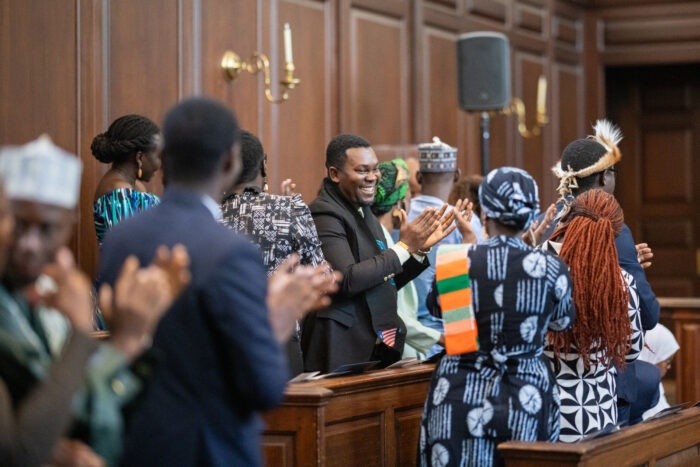
In 2022, Dennis participated in the Mandela Washington Fellowship at the Presidential Precinct in Charlottesville, Virginia. The Fellowship exposed him to international advocacy strategies, expanded his networks, and enhanced his leadership capabilities. Dennis credits the Fellowship with reinforcing both strategic thinking and the importance of collaboration. Reflecting on lessons he learned during his time in Virginia, he says:
“Focus on collaboration, not competition. Support each other’s projects. Stay connected.”
The Social Justice Centers continue to refine and expand their operations. They are establishing additional hubs in underserved areas, training local organizers and paralegals, and cultivating networks with other civil society actors. Digital platforms and media partnerships extend the reach of advocacy, while policy engagement aims to effect structural change within law enforcement and judicial institutions. Dennis emphasizes the importance of persistence and creativity in sustaining long-term change:
“Let us not forget our why. Let us cultivate a spirit of resilience.”
Through targeted support for leadership at the community level, initiatives like Dennis’s Social Justice Centers demonstrate that modest beginnings, such as a football match in a Nairobi slum, can catalyze nationwide movements that challenge entrenched violence and impunity.
The Impact of Targeted Investment
For the Presidential Precinct, Dennis’s trajectory illustrates how targeted investment in grassroots leaders yields outsized impact. Alumni become multipliers, sharing knowledge, fostering innovation, and sustaining advocacy over the long term. As Dennis believes, “we must make justice accessible to the poor.” For residents of Nairobi’s informal settlements, his work offers both protection and hope, transforming vulnerability into agency. The support provided through the Presidential Precinct and the Mandela Washington Fellowship refined his skills, provided mentorship, and created a network for collaboration. His story exemplifies the broader principle that societal change requires strategic support of grassroots leadership.
Each year, on July 7, Kenya celebrates Saba Saba Day. On this day, Dennis and his colleagues remember victims of extrajudicial killings by “either [doing] a peaceful protest or a march from the slums to Parliament or to the Office of the President.” By cultivating resilience, legal literacy, and solidarity, Dennis Orengo has fought for justice in Kenya’s informal settlements, and demonstrated both the power of local agency and the compounding effect of targeted investment in civic leadership.