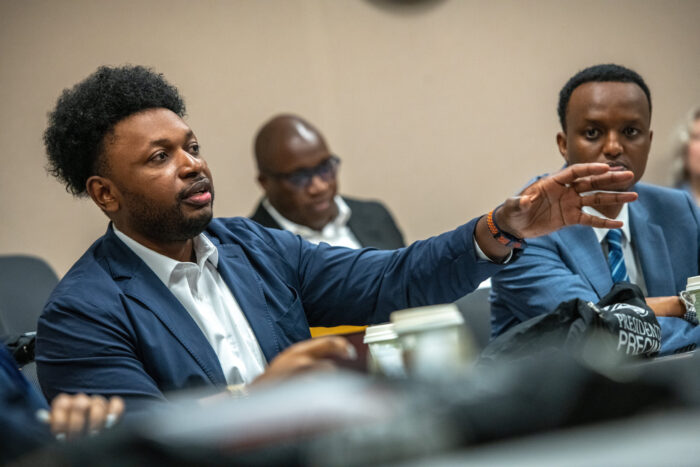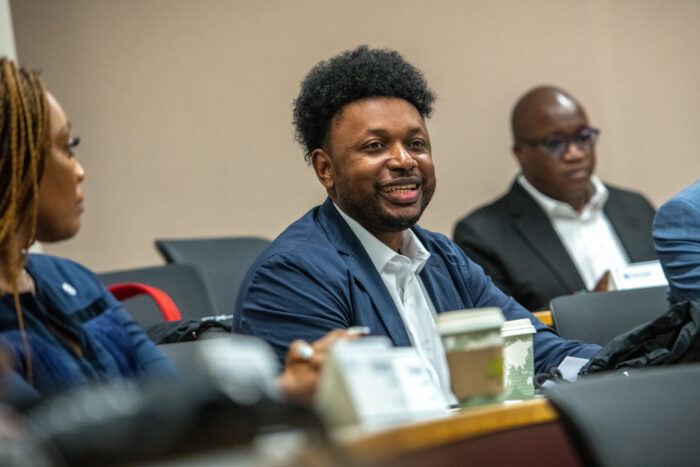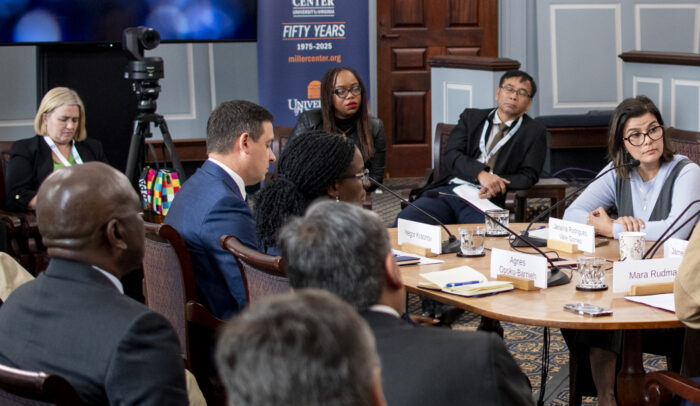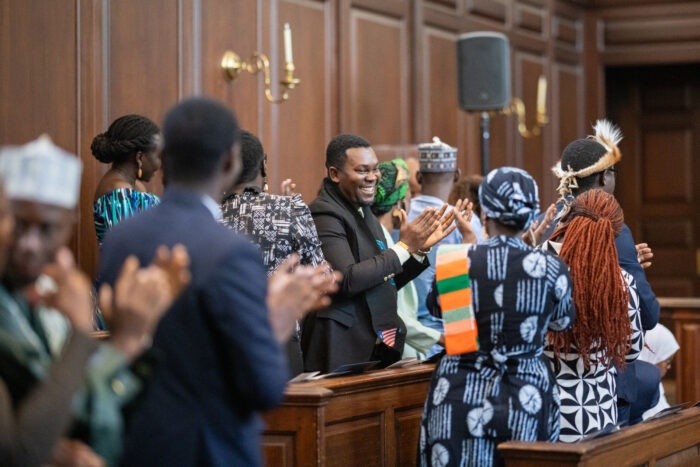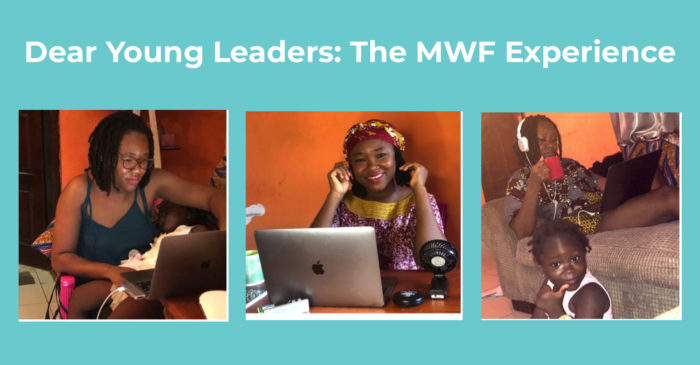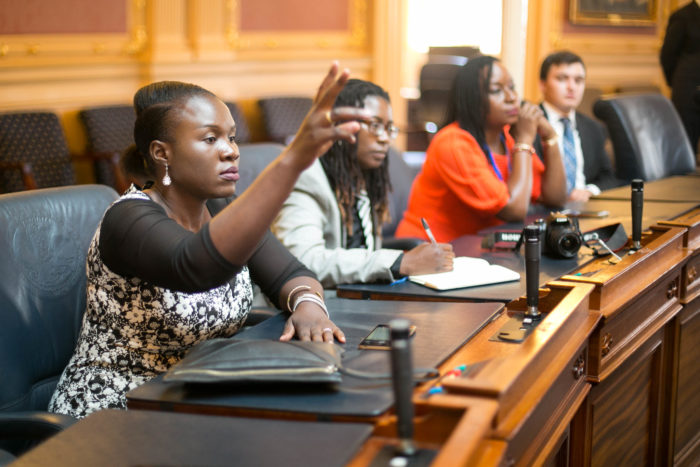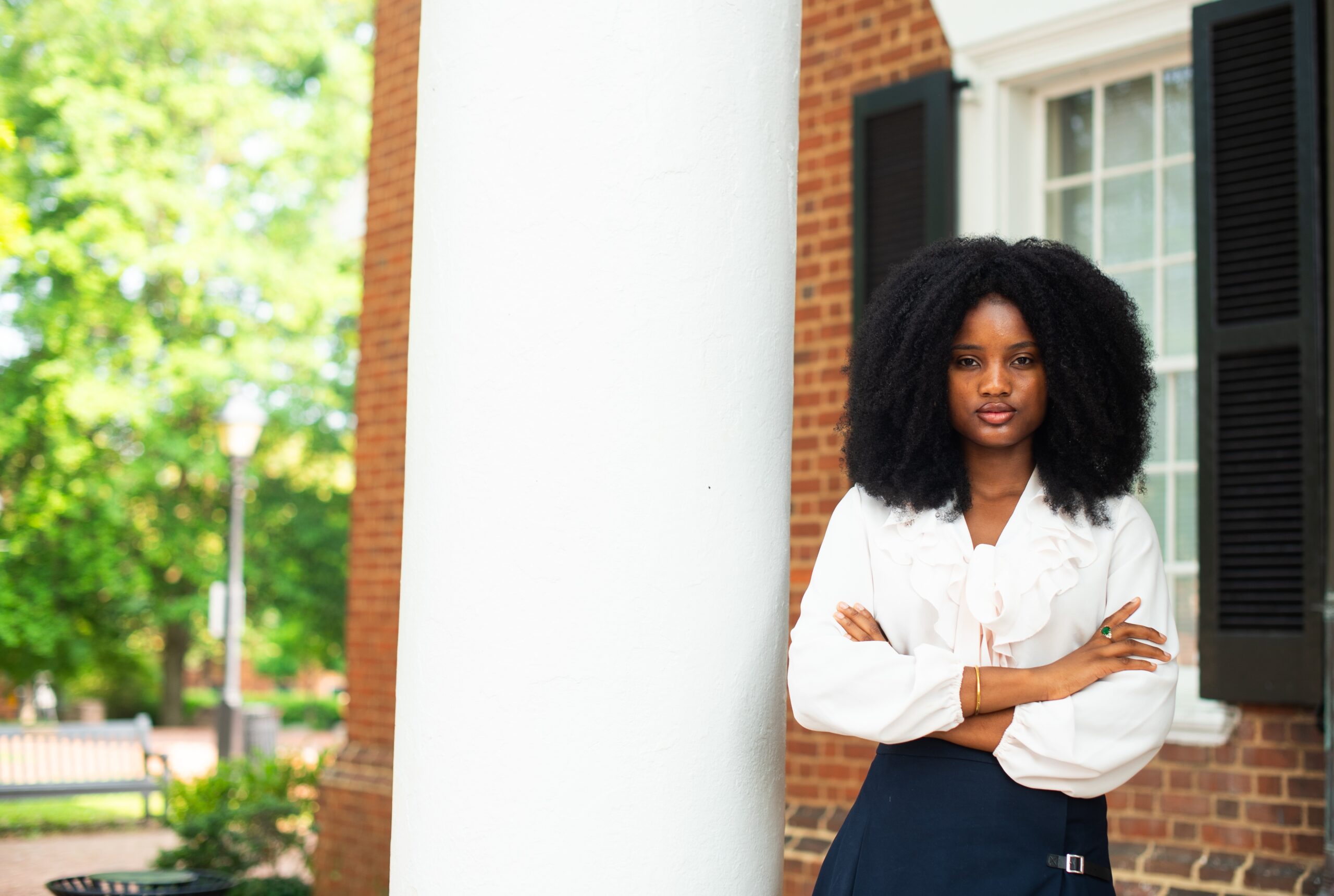
For many interns at the Presidential Precinct, the experience is more than just a summer role — it’s a turning point. For Assa Sacko, her time as a Summer Associate during the 2025 Mandela Washington Fellowship became a defining chapter that clarified her passions, reshaped her understanding of leadership, and deepened her commitment to service. Through moments both ordinary and profound, Assa came to see leadership not as a title, but as a practice rooted in empathy, connection, and the willingness to engage with complex situations.
What have you been up to since your time at the Presidential Precinct last summer?
Since my time as a Summer Associate, I’ve continued building on the leadership and global perspective I gained, which helped me realize that my passion lies at the intersection of public health and policy. I now serve on the Student Advisory Board for the Center for Global Health Equity at UVA, where I also mentor students in the Albemarle High School Global Health Case Competition as they work through real-world health challenges. I’m also collaborating with a medical student from the University of Global Health Equity in Rwanda on a research project focused on pharmaceutical access — work that directly connects to the issues that first inspired me during the Fellowship. Alongside this, I work at the Batten School of Public Policy and Leadership and serve as a nutrition intern with UVA Football, while still making time to enjoy the everyday moments of college life.
What shaped your understanding of leadership and democracy?
Several moments from last summer reshaped how I think about leadership. One of the most memorable was an early, chaotic trip to Kroger, where I helped guide Fellows through an unfamiliar grocery system under a tight timeline. That experience taught me that leadership often means staying calm and supporting people through uncertainty. Throughout the summer, I built close relationships with many Fellows, which showed me that leadership is deeply relational — rooted in trust, empathy, and connection. Visiting Monticello, followed by attending a naturalization ceremony, also had a lasting impact on me. Those experiences reminded me that democracy is complex and imperfect, but continues to evolve through reflection and resilience, and that leadership often shows up in small, meaningful acts and honest conversations.
How did the experience influence your career path?
When I first arrived at the Presidential Precinct, I wasn’t sure whether I wanted to pursue law or medicine, so I spent time speaking with Fellows and mentors to better understand my path. Through those conversations and my exposure to leaders in diplomacy and international engagement, I realized that impact doesn’t have to follow one traditional route. Working on a podcast project where I interviewed Fellows about their work — ranging from combating female genital mutilation to advancing women’s empowerment — pushed me to think more boldly about the kind of impact I want to have. Those experiences helped me understand that global leadership is not about titles, but about how we use our skills and platforms to serve others, which ultimately gave me a clearer sense of direction.
What do you hope future Fellows and Associates take away from this experience?
As the Presidential Precinct transitions to the Global Democracy Fellowship, I hope future Fellows and Summer Associates walk away with the understanding that leadership is inherently collaborative and shaped by diverse perspectives. I hope they leave with both the courage to lead boldly and the humility to listen and learn from others. Leadership can take many forms — whether through policy, community work, or simply showing up consistently to serve others. For Summer Associates especially, I hope they recognize that they’re not just supporting a program, but helping shape an experience that can truly impact people’s lives, often through small, meaningful moments. More than anything, I hope they leave believing that democracy and leadership are ongoing processes that require continued commitment, collaboration, and action long after the program ends.
Assa’s journey reflects the lasting impact of the Presidential Precinct experience — one that extends far beyond a single summer. Through her continued work in global health, policy, and mentorship, she carries forward the lessons she gained at the Presidential Precinct: leadership is relational, democracy is ever-evolving, and meaningful change often begins in small, human moments. As new cohorts of Fellows and interns step into this legacy, Assa’s story serves as a powerful reminder that the Presidential Precinct is not just a place where leaders gather — it’s where they begin to understand the kind of leaders they are becoming.
The Presidential Precinct equips promising leaders to transform their communities. If you’d like to hear more stories from leaders who are shaping the future, subscribe to our newsletter.